
The Science · July 17, 2026 · 5 min · By Isadora Velazquez
GLP-1s and sleep apnea: the first drug approved for the condition
The first medication ever cleared to treat obstructive sleep apnea is a GLP-1 class drug. Here is what the SURMOUNT-OSA trial showed, who the approval covers, and why it complements rather than replaces a CPAP machine.
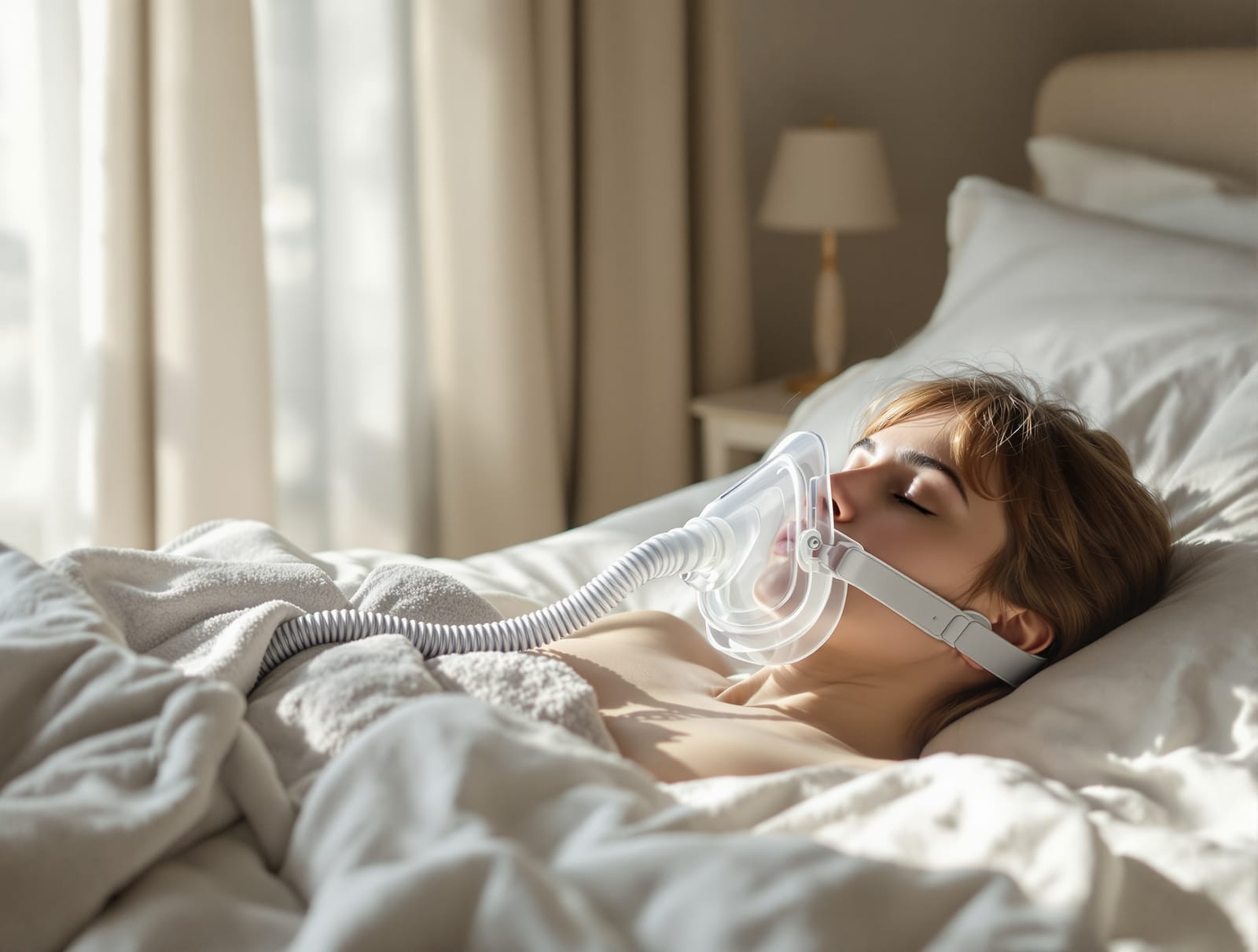
For most of the last decade, the only proven treatments for obstructive sleep apnea were mechanical: a CPAP machine, an oral appliance, or in some cases surgery. In late 2024 that changed. A GLP-1 class medication became the first drug ever approved to treat the condition itself, not just the weight that drives it. For the large share of apnea patients who also carry excess weight, that is a genuinely new option worth understanding.
Why weight and sleep apnea are linked
Obstructive sleep apnea happens when the muscles and soft tissue around the throat relax during sleep and repeatedly block the airway, causing breathing to pause dozens or even hundreds of times a night. Excess weight is the single largest modifiable risk factor. Fat deposited around the neck and tongue narrows the airway, and abdominal fat reduces lung volume, which makes the airway more likely to collapse. The Mayo Clinic lists obesity among the leading causes of the condition. Because the mechanism is partly mechanical, losing weight has long been known to reduce apnea severity. What was missing was proof that a medication could deliver that benefit reliably.
What the SURMOUNT-OSA trial found
The evidence came from a pair of phase 3 trials called SURMOUNT-OSA, published in the New England Journal of Medicine in 2024. The studies enrolled adults with obesity and moderate to severe obstructive sleep apnea, one group already using CPAP and one group not, and randomly assigned them to weekly tirzepatide or placebo for roughly a year.
The primary measure was the apnea-hypopnea index, or AHI, the number of times per hour that breathing partially or fully stops during sleep. Tirzepatide reduced the AHI by roughly 25 to 30 events per hour, several times the reduction seen with placebo. Many participants improved enough to move down a severity category, and some reached a point where their apnea would be considered mild or resolved. Blood pressure and inflammatory markers improved as well, which matters because untreated apnea is itself a driver of cardiovascular risk.
The FDA approval that followed
In December 2024 the FDA approved tirzepatide, sold as Zepbound, for moderate to severe obstructive sleep apnea in adults with obesity, making it the first medication ever cleared to treat the condition. The approval is specific: it applies to adults who have both obesity and moderate to severe apnea, and the agency framed the drug as a treatment to be used alongside a reduced-calorie diet and increased physical activity, not as a replacement for evaluation by a sleep specialist.
What it does not replace
This is the part that gets lost in the headlines. The medication does not open a blocked airway in real time the way a CPAP machine does. It works upstream, by reducing the weight and tissue that cause the obstruction, which takes months. For someone with severe apnea and significant daytime symptoms, stopping CPAP on the assumption that a weekly injection has taken over would be a mistake. The realistic model is combination and, over time, possible step-down: continue established therapy while the medication reduces the underlying driver, then reassess airway measurements with a clinician before changing anything. Whether tirzepatide qualifies for a given patient still runs through the same evaluation described in who actually qualifies for a GLP-1.
Semaglutide or tirzepatide?
The sleep apnea indication specifically belongs to tirzepatide, the dual GIP and GLP-1 agonist, because that is the molecule SURMOUNT-OSA studied. Semaglutide has strong evidence in other areas, but it does not carry an apnea indication. For patients weighing the two drugs, this is one more axis of difference layered on top of the tolerability and weight-loss distinctions covered in how semaglutide and tirzepatide compare. The right choice depends on the full clinical picture, not on any single trial.
Why this matters beyond a good night of sleep
Untreated obstructive sleep apnea is not just exhausting. It is linked to high blood pressure, atrial fibrillation, stroke, and impaired glucose control, and the fragmented sleep it causes can itself make weight harder to manage, a feedback loop explored in sleep and weight. A treatment that attacks weight and apnea at the same time can, in principle, interrupt several of those problems at once. That is what makes the SURMOUNT-OSA result more than an incremental footnote.
The takeaway
Tirzepatide is now the first medication approved to treat obstructive sleep apnea in adults with obesity, backed by trial evidence showing large reductions in the apnea-hypopnea index. It works by reducing the weight that narrows the airway, which means it complements rather than instantly replaces CPAP, and it belongs inside a plan supervised by both a prescriber and, ideally, a sleep specialist. If you have obesity and diagnosed apnea, this evidence is worth raising at your next appointment. This is general information, not medical advice; treatment decisions belong to you and your clinicians together.
Related reading: Sleep and weight: the overlooked lever.