
The Medications · July 5, 2026 · 5 min · By Maeve Castellucci
Storing your GLP-1 at home: refrigeration, expiry, and pen care
These are fragile biologic drugs, and a few storage habits protect both the medication and the money you spent on it.
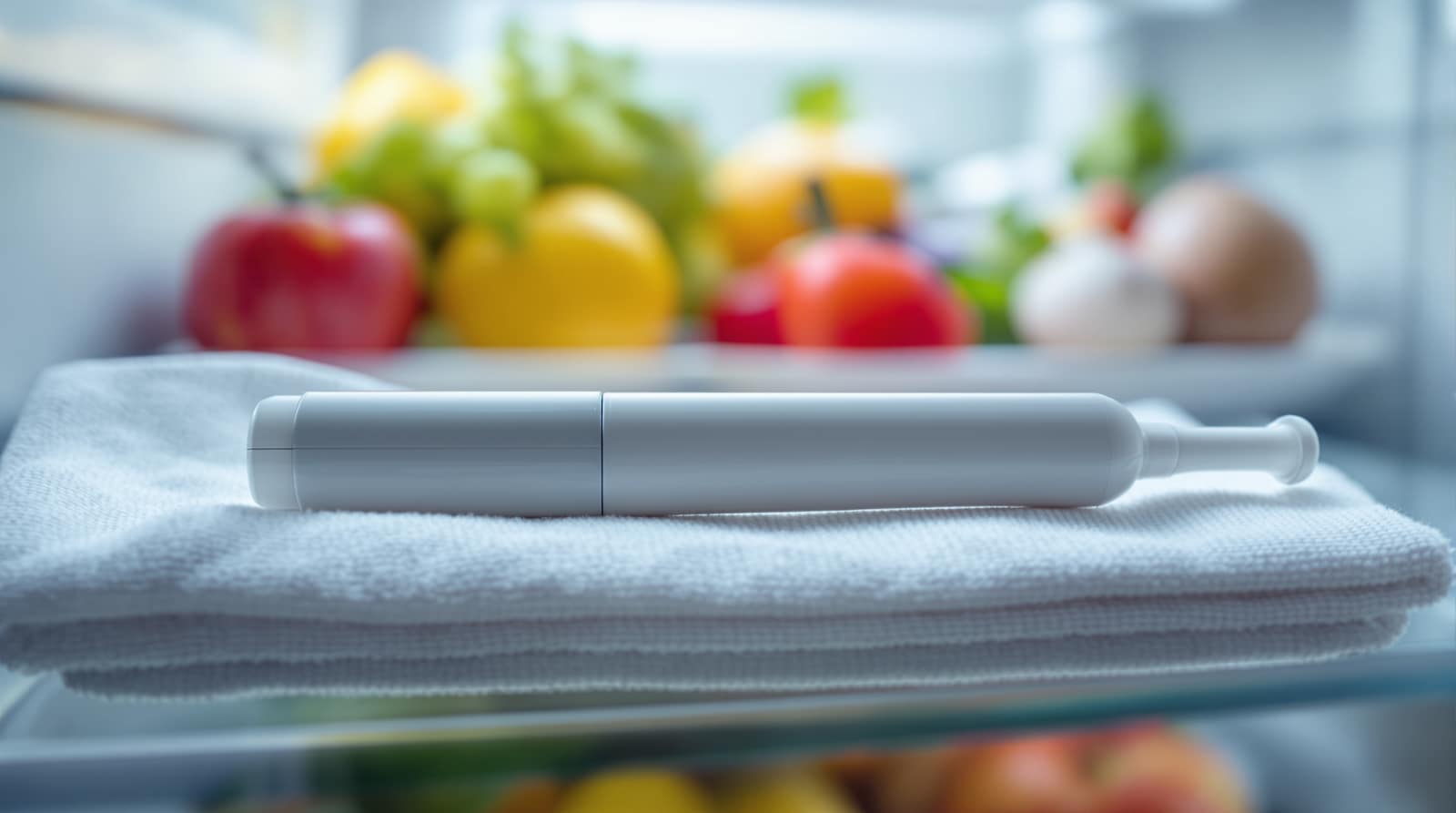
A GLP-1 pen is not a bottle of pills. It is a biologic medication, a protein-based drug that heat, freezing, and light can quietly degrade, and at current prices a ruined pen is an expensive mistake. The storage rules are simple, but they are worth actually knowing rather than half-remembering, because a degraded pen usually looks completely normal from the outside.
The refrigerator rules
Unopened pens belong in the refrigerator, in the manufacturer's target range of roughly 36 to 46 degrees Fahrenheit, which is standard refrigerator territory. Placement matters more than people expect. The door shelf swings through warm kitchen air every time it opens, and the back wall of some refrigerators runs cold enough to freeze, which brings up the single most important rule: a pen that has frozen is ruined and must be discarded, even after it thaws and looks fine. The middle of a main shelf, away from the cooling element and the door, is the safe zone. Keeping pens in their original carton also shields them from light, which the labeling for these products specifically advises; the MedlinePlus entry for semaglutide summarizes the storage directions in plain language.
The room-temperature window
Once a pen is in use, most brands allow a defined stretch at room temperature, and the details differ by product: some labels permit weeks below 86 degrees, others are stricter. That flexibility is a convenience, not an invitation. The window is a running clock, not a pause button, and time out of the fridge counts cumulatively. The practical habit is to write the date on the pen or the carton the day it first leaves refrigeration, because memory is exactly as reliable as you would expect across a multi-week dosing schedule. Check your own product's labeling for its specific limits, the FDA prescribing information spells them out, and when in doubt, the pharmacist who dispensed it can answer in thirty seconds.
What ruins a pen fastest
The common failure modes are mundane. A pen left in a hot car, even briefly on a summer day, can exceed its temperature ceiling in minutes. A pen stored on the counter by a sunny window collects both heat and light. A pen shoved against the freezer vent at the back of the fridge freezes without anyone noticing. And a pen that expires simply ages out: the expiration date and the in-use window are both hard limits, not suggestions. If the liquid in a pen looks cloudy, discolored, or has particles floating in it when the label says it should be clear, that pen should not be used regardless of the calendar. None of this requires vigilance, just a consistent spot and a written date.
Needles, sharps, and the rest of the kit
Storage extends past temperature. Pen needles are single use, attached fresh for each injection and removed after, since a needle left on the pen can let air in or medication leak out. Used needles go in an FDA-cleared sharps container or a heavy plastic household container with a screw lid, never loose in the trash. And all of it, pens and needles alike, belongs out of reach of children and pets, refrigerated or not. If you travel, the same temperature logic applies on the road, and our guide to traveling on a GLP-1 covers coolers, airports, and time zones in detail.
Why this matters more with compounded products
Brand-name pens at least arrive with tested stability data and clear labeling. Compounded semaglutide, dispensed in vials with syringes, often comes with thinner storage guidance and no manufacturer stability testing behind it, one more entry in the longer list of differences covered in compounded versus brand semaglutide. Whatever the source, the discipline is the same: know the temperature range, know the clock, and store it consistently.
The takeaway
Keep unopened pens in the middle of the refrigerator in their carton, never use a pen that has frozen, date each pen when it comes out, and respect both the room-temperature window and the expiration date. Handle needles as single-use and dispose of them in a proper sharps container. Five minutes of setup protects a medication that costs real money and, more importantly, protects the steady dosing your results depend on. This is general information, not medical advice; your pharmacist and your product's labeling are the authorities on your specific pen.
Related reading: Traveling on a GLP-1: storage, timing, and staying on track.
More in The Medications
View all →- Wegovy generic name: semaglutide, and why a real generic Wegovy exists in Canada but not in the US
- How to Inject Semaglutide at Home: The Six-Point Check Before Every Dose
- GLP-1 Medications and Your Other Prescriptions: an Absorption Audit You Can Run Yourself
- Missed a GLP-1 dose? The rules for getting back on schedule