
Nutrition · April 28, 2026 · 5 min · By Lorenzo Adeyinka
How much protein you actually need on a GLP-1
Appetite suppression makes protein harder to hit and more important to prioritize, so here is how to get enough.
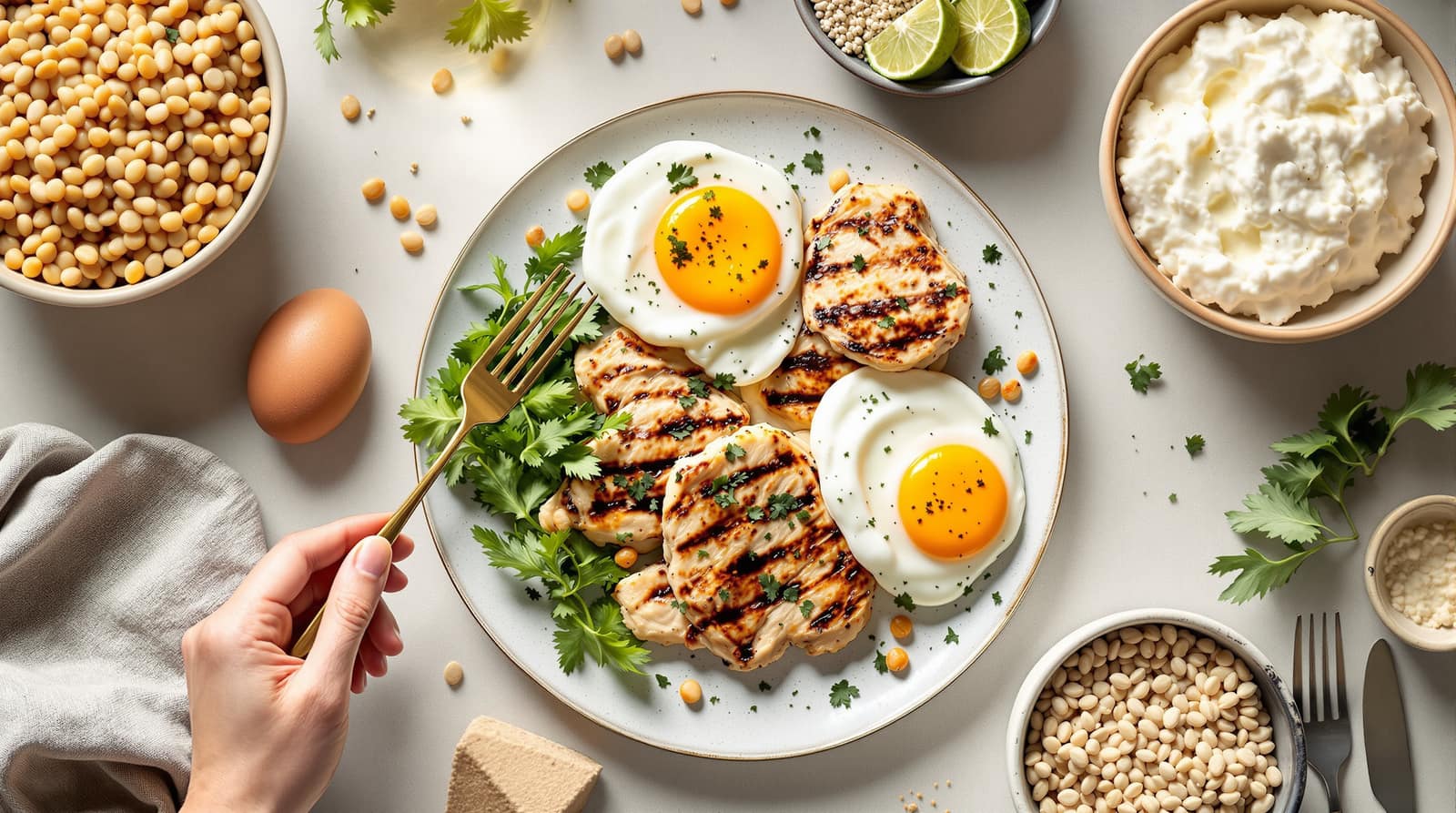
Ask anyone who has spent time on a GLP-1 what the hardest part of eating is, and many will say the same thing: getting enough protein. The drugs work by quieting appetite, which is exactly the point, but it also means you can go most of a day without feeling like eating much at all. That makes protein both harder to reach and more important than ever.
Why protein matters more on these drugs
When you are losing weight in a calorie deficit, protein is what protects your muscle. Eat too little and your body breaks down lean tissue along with fat, which is the issue we cover in protecting muscle on a GLP-1. Protein also helps you feel satisfied and supports the repair work that resistance training depends on. On a GLP-1, where total food intake drops, the protein you do eat has to do more work, so it needs to be a deliberate priority rather than an afterthought.
A realistic target
The baseline government recommendation, around 0.8 grams of protein per kilogram of body weight, is set to prevent deficiency in sedentary people, not to preserve muscle during active weight loss. Most guidance for people losing weight while trying to protect lean mass lands higher, often in the range of roughly 1.2 to 1.6 grams per kilogram of body weight per day, and sometimes more for older adults or those training hard. A NIH-indexed review discusses why higher protein intakes help preserve lean mass during weight loss. In everyday terms, many adults land somewhere around 80 to 120 grams a day, but the right number depends on your size, age, and activity, so use this as a starting point to discuss with a clinician or dietitian rather than a fixed rule.
How to actually hit it when you are not hungry
The target is the easy part; eating it is the challenge. A few tactics make a real difference. Eat protein first: when you only have appetite for a few bites, spend them on the protein on your plate before the bread or sides fill you up. Spread it across the day, because your body uses protein best in moderate amounts at each meal, so aim for a solid serving at breakfast, lunch, and dinner rather than one big load at night. Lean on easy, dense sources like Greek yogurt, cottage cheese, eggs, fish, poultry, tofu, edamame, and protein shakes, which pack a lot into a small volume that suits a small appetite. And keep liquid protein on hand, since on days when chewing feels like too much, a shake can carry 25 to 30 grams in something you can sip. The Mayo Clinic has a useful primer on protein sources and quality.
Do not let fiber and fluids fall away
Focusing on protein is smart, but a protein-only diet creates other problems, particularly constipation, which is already common on these drugs. Pairing protein with vegetables, fruit, and whole grains keeps fiber up; see fiber and GLP-1. Fluids matter too, especially as you eat less overall.
Plant proteins count, with a small caveat
You do not have to live on chicken breast and egg whites to hit your numbers. Tofu, tempeh, edamame, lentils, beans, and soy milk all contribute real protein, and they bring fiber along with them, which helps with the constipation problem. The one nuance is that most plant sources are slightly less protein-dense and have a different amino acid profile than animal sources, so people leaning heavily on plants may need a bit more total protein and a wider variety to cover their bases. A protein powder, whether whey or a soy or pea blend, is a simple way to close the gap on low-appetite days. The point is not to obsess over the perfect source but to make sure protein shows up, in some form, at every meal.
The takeaway
Protein is the nutrient to protect first on a GLP-1. Aim for a per-meal habit rather than a daily scramble, lean on dense and liquid sources when appetite is low, and pair it with fiber and water. A rough target of 1.2 to 1.6 grams per kilogram is a reasonable starting point, but treat that as a conversation starter with a clinician or registered dietitian who can tailor it to you.
Related reading: Strength training on a GLP-1.