
Nutrition · July 4, 2026 · 5 min · By Lorenzo Adeyinka
Eating out on a GLP-1: menus, portions, and social meals
Restaurant portions and a suppressed appetite make an odd pair, and a few habits keep dinners enjoyable instead of uncomfortable.
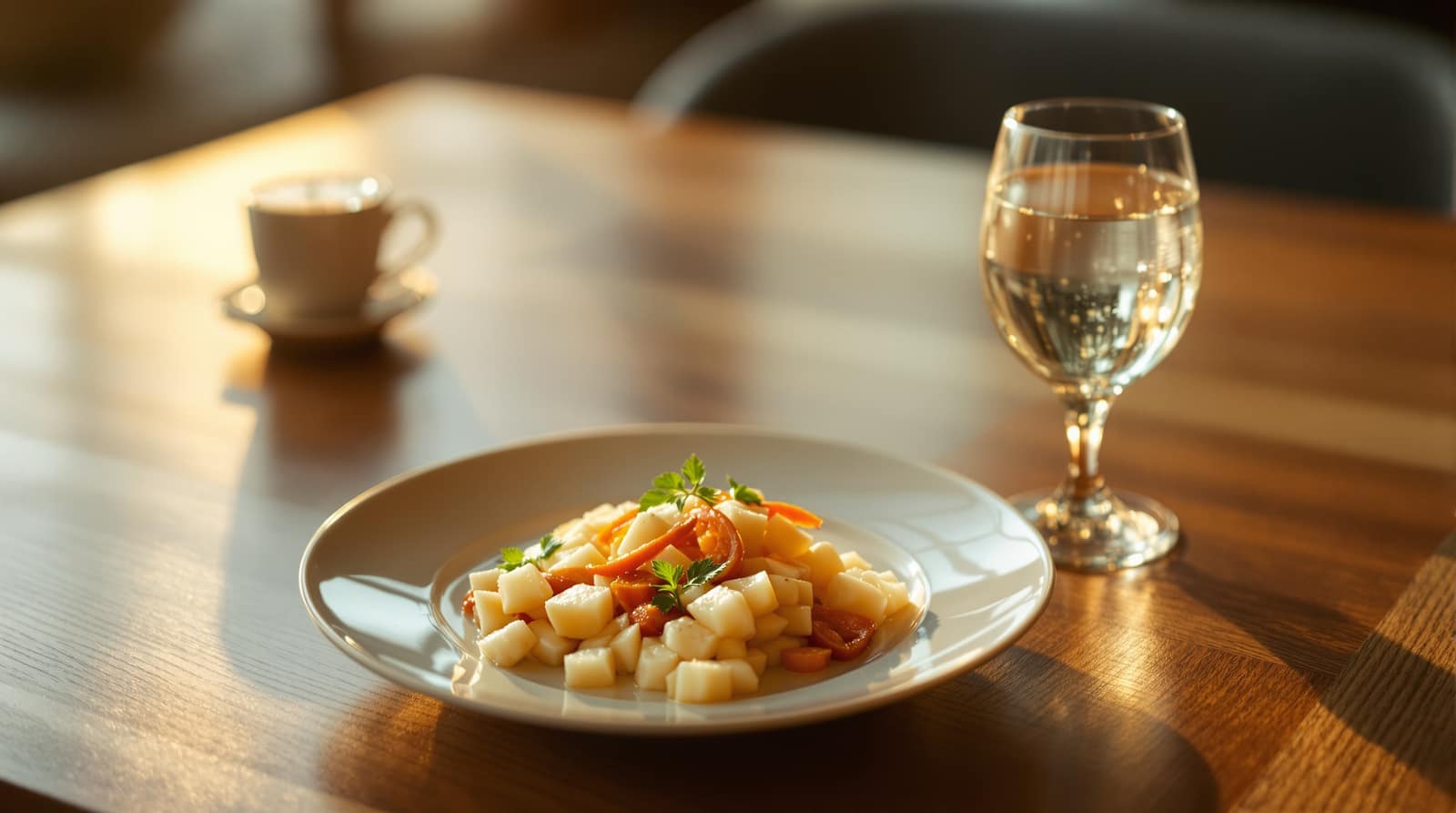
Restaurants are built around abundance: large portions, rich preparations, courses arriving whether you are ready or not. A GLP-1 rewires your side of that equation. Appetite shrinks, digestion slows, and the meal that used to be a pleasure can become a negotiation. None of this means giving up eating out. It means going in with a plan, because the restaurant will not adjust to you, and winging it is how people end up queasy in the car home.
The portion problem, inverted
Most dining advice assumes you need help eating less. On a GLP-1 the problem flips: the portion arrives and you are full a third of the way in. Fighting through the rest is the mistake. Overeating on a medication that slows stomach emptying is one of the fastest routes to the nausea and reflux covered in managing GLP-1 nausea, and one heavy restaurant meal can sour a whole evening. The fix is deciding before the food arrives: order the appetizer portion, split an entree, or plan on a box from the first bite. A half-finished plate is not rudeness or waste, it is the dose working.
Order for the medication, not the menu
Because every bite counts more when there are fewer of them, the old advice about protein targets on a GLP-1 applies double in a restaurant. Anchor the order around a lean protein, grilled fish, chicken, a lean cut of steak, and let the sides be vegetables more often than fries. Very rich, fried, or heavily sauced dishes are the most common restaurant triggers for discomfort on these drugs, since fat sits longest in an already slow stomach. That does not forbid them; it argues for small amounts of the rich thing rather than a plate of it. Eating slowly matters more than usual too, because fullness signals arrive on a delay, and pace is the only early warning system you have.
The social part
A quieter challenge is the table itself. Food is social glue, and eating noticeably less invites commentary. It helps to remember you owe nobody a medical disclosure over dinner. A simple line, something like eating light tonight, closes the topic for most company. Ordering something, even small, keeps you part of the meal in a way that abstaining does not. And if a companion pushes, the discomfort is theirs to manage, not yours. Many people on these medications report that the social adjustment is harder than the physical one for the first month or two, and that it fades as the new pattern becomes ordinary.
Alcohol, briefly
Restaurant meals often come with a drink, and alcohol lands differently on a GLP-1: many people find their tolerance and their interest both drop. A smaller pour, sipped slowly with food and water alongside, is the sensible ceiling, and the fuller picture is in GLP-1 and alcohol. General dietary guidance from the CDC on moderate drinking applies unchanged; the medication just makes the lower end of moderate feel like plenty.
The takeaway
Eating out on a GLP-1 works fine with three habits: decide the portion before the plate arrives, build the order around lean protein and go easy on the very rich preparations, and eat slowly enough for the delayed fullness signal to catch up. Add a low-key script for the social questions and a light hand with alcohol, and restaurants stay what they should be, a pleasure. This is general guidance, not medical or nutrition advice; a clinician or dietitian can tailor it to your situation.
Related reading: Hitting your protein targets on a GLP-1.