
Side Effects · April 20, 2026 · 5 min · By Nadia Thorvaldsen
GLP-1 nausea: why it happens and how to manage it
Nausea is the most common reason people quit a GLP-1 early, but it is usually manageable with a few adjustments.
Nausea is the side effect people on GLP-1 medications talk about most, and it is the single most common reason people stop the drug before it has had a chance to work. The good news is that it is usually temporary and often manageable. Understanding why it happens makes it easier to get ahead of it.
Why GLP-1 drugs make you queasy
GLP-1 medications slow down how fast your stomach empties into your intestine. That delayed gastric emptying is part of how the drugs reduce appetite: food sits longer, you feel full sooner and for longer. But a stomach that empties slowly can also feel overfull, bloated, and nauseated, especially after a large or fatty meal. The Cleveland Clinic describes this slowed digestion as a core feature of the drug class. Nausea is most intense in two windows: the first week or two after starting, and the days right after a dose increase.
Eat in a way that respects a slow stomach
Most nausea management comes down to working with your digestion rather than against it. A few habits help most people. Eat smaller portions and stop before you feel completely full, because a slow stomach fills faster than you expect. Favor bland, lower-fat foods when you feel queasy, since fat slows emptying even further. Eat slowly and give yourself time between bites. Avoid lying down right after eating, which can worsen reflux and that overfull feeling. Stay hydrated, but sip rather than gulp, and try drinking between meals instead of flooding a full stomach.
Greasy, fried, very rich, and heavily sweet foods are the most common triggers. Many people also find that alcohol makes nausea worse, which our piece on GLP-1s and alcohol gets into.
Timing and a few small remedies
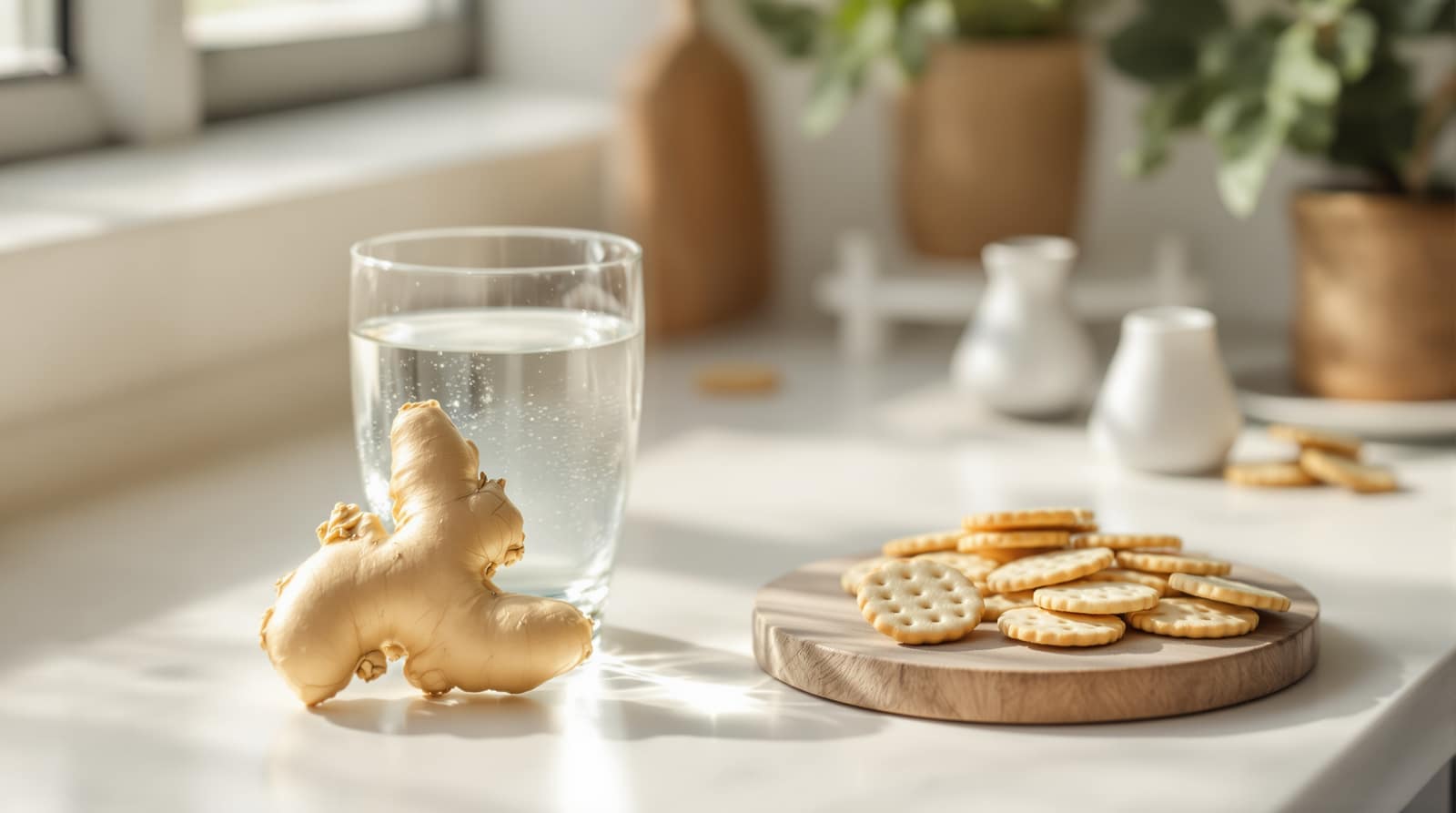
Beyond what you eat, when you eat and when you dose can help. Some people find that taking their weekly injection on a day when they can eat lightly, rather than right before a big meal or event, makes the following day easier. Others do better dosing in the evening so the peak passes while they sleep. These are personal patterns, not rules, and they are worth discussing with your prescriber rather than improvising. Simple remedies help too: ginger (as tea, chews, or capsules), cold or room-temperature foods that have less smell than hot meals, and giving yourself a real pause between courses. If nausea is genuinely interfering with your life, a clinician can prescribe an anti-nausea medication for the rough early stretch, so it is worth asking rather than suffering through it silently.
Titration is your main defense
The reason prescribers start you low and increase slowly is precisely to limit nausea. This is called titration, and it gives your body time to adapt at each step. If a dose increase hits you hard, that is useful information. A clinician may hold you at your current dose longer before stepping up, rather than pushing ahead on schedule. Our guide to titration schedules explained walks through how this usually works. Never adjust your own dose to chase comfort or results without talking to your prescriber, because the schedule exists for safety, not bureaucracy.
When nausea is more than a nuisance
Mild, fading nausea is expected. Some signs deserve a prompt call to your clinician: vomiting that keeps you from holding down fluids, signs of dehydration, or severe, persistent abdominal pain, particularly pain that radiates to your back. Severe stomach pain can occasionally signal pancreatitis, a rare but serious issue noted in the labeling reviewed by the FDA. Persistent vomiting also raises the risk of dehydration and electrolyte problems, which is why fluids matter so much; see our guide to hydration and electrolytes.
The practical takeaway
For most people, GLP-1 nausea is a passing phase, not a permanent state. Smaller and blander meals, sipping fluids, avoiding fatty and fried foods, and a patient titration schedule resolve it for the majority. If it does not ease, or if it crosses into vomiting, dehydration, or severe pain, that is a medical conversation, not something to push through alone. This is general information, not a treatment plan, so loop in a licensed clinician about any dosing change or worrying symptom.
Related reading: GLP-1 side effects: an overview.